
A suction cup cat toy can turn a quiet corner into a small, springy game. When a cat bats at the attachment, the flexible stem bounces back, inviting another paw tap, pounce, or watchful pause. It is a simple idea, but the setup matters. A toy that slips, lands near a hazard, or has a worn attachment is not much fun for anyone.
The safest approach is also the easiest to repeat. Pick the right surface, give the toy room to move, stay nearby for the first few sessions, and inspect it before the next round. This guide walks through how to set up a suction cup cat toy so your cat can enjoy the movement without turning playtime into a cleanup project.
There is no need to make the toy the center of your cat's day. A comfortable home still starts with the basics: fresh water, a clean litter box, a quiet place to rest, scratching choices, and time for play that matches your cat's energy. Think of the spring toy as one short activity in that mix. Used carefully, it can give a cat a satisfying burst of motion without adding clutter or asking them to play when they would rather watch from the sidelines.
What makes a suction cup cat toy different
Unlike a wand toy that you hold, a suction cup toy stays in one place. The base attaches to a smooth surface, while a flexible spring, rod, or tether lets the top piece wobble when your cat touches it. Some cats like the quick bounce. Others prefer to crouch nearby and wait for the movement to settle before they decide whether to pounce.
That fixed base can be useful because it gives a cat a repeatable target. It can also make the toy more predictable than something that rolls under furniture. But fixed does not mean foolproof. The cup needs to hold, the attachment needs to stay whole, and the play space needs to be clear. The American Association of Feline Practitioners' cat-friendly home guidance puts safe places and opportunities for play together for a reason. Play works best when the room gives a cat choices without adding stress.
Start with the right surface
A suction cup needs a surface that is smooth, clean, and dry. Hardwood, tile, a clean glass door, and some finished walls are often more reliable than fabric, rough wood, textured paint, dusty baseboards, or a damp window. Before you offer the toy, wipe the cup and the surface, then press the cup down firmly. Give the stem a gentle tug with your hand. If it shifts right away, choose another spot.
Set it where your cat has enough space to step back, circle, and pounce. Avoid the top of a tall cat tree, a narrow shelf, a crowded entryway, or the space right beside a food bowl and litter box. A cat should not need to squeeze around furniture or race toward a doorway to reach the toy. Clear a small open zone first, then introduce the toy there.

Choose a location that fits your cat
Location changes how a toy feels. A confident cat may enjoy batting at a spring toy in the middle of an open room. A cautious cat may be more willing to investigate when the toy is a few feet from a favorite perch or hiding place. Put it close enough to familiar territory that your cat feels comfortable, but not so close that the spring can hit a bed, scratching post, or piece of furniture.
Glass can be a useful option when it gives the toy a steady surface and keeps it at a comfortable height. Check the cup carefully before each session, especially if the toy is within reach of a cat that likes to leap. Do not attach it to an open window or anywhere a released toy could encourage a cat to jump toward an unsafe edge. Leave windows secured and screens checked before any play begins.
If your cat is a low-to-the-ground hunter, a floor placement may be the better fit. The goal is not to make the toy look dramatic. It is to make it easy for your cat to see, approach, and leave whenever they want.

Introduce the toy without making it a test
Set the toy up, then let your cat notice it. You can tap the attachment lightly once or twice, but do not wave it in your cat's face or keep bouncing it after they walk away. A cat that sits nearby, sniffs the base, watches the spring, or gives one careful paw tap is already learning what the object does.
Try the first session when your cat is normally awake and receptive, such as before a usual playtime or before a meal. A few minutes is enough. End while your cat still seems interested, then put the toy away if its attachment is not meant for unsupervised use. Short, successful sessions often build more interest than leaving a new object out until it becomes part of the scenery.
Keep the first few sessions simple enough that you can tell what your cat likes. Do not introduce a new food puzzle, another noisy toy, or a big room change at the same time. When only one thing is new, it is easier to see whether your cat enjoys the springy movement, prefers a lower placement, or needs a quieter spot. That makes the next choice more useful and keeps play from feeling overwhelming.
A cat that ignores the toy is not necessarily bored or picky. The surface may feel unstable, the room may be too busy, or the motion may simply not match that cat's favorite play style. Give the toy a few separate tries. If your cat prefers chasing something across the floor, a rolling option from the automatic cat toys collection may be a better match. If your cat needs more choices around the room, the cat enrichment guide can help you build a calmer play setup.
Supervise the first sessions closely
Every cat has a different way of playing. Some bat lightly and pause. Others grab, bite, kick, and pull with surprising force. Stay close enough during the first sessions to see how your cat uses the toy and whether the base stays secure. If the toy slides, detaches, or starts to lean, stop the session and reset it before offering it again.
Pay particular attention to feathers, strings, bells, fabric pieces, and clips. A cat that is trying to chew, pull apart, or swallow an attachment needs a different play option or closer supervision. The safest toy is one that fits your cat's actual habits, not the one that looked most exciting before it came out of the package. When in doubt, put it away and choose a sturdier activity you can enjoy together.
Supervision is not a sign that the toy failed. It is how you learn whether it belongs in your normal rotation. The same quick check that keeps a spring toy safer also helps you notice what kind of movement gets your cat engaged: a wiggle, a rebound, a short chase, or a quiet pause before a pounce.
Inspect the toy before every play session
Take ten seconds before setting the toy out. Look at the suction cup for dust, cracks, warping, or a curled edge. Check the spring or rod for bends and sharp points. Then look at the attachment itself. Feathers should not be shedding heavily. Fabric should not be fraying. Small pieces should not be loose enough to pull away.
Clean the cup when it loses grip, and follow the maker's care instructions for the rest of the toy. A clean cup generally holds better than one covered in dust or pet hair. Retire an attachment when it is worn. Replacing a small worn piece is far easier than hoping a damaged toy survives one more enthusiastic session.
It is also worth checking the floor around the play area. Pick up packaging ties, rubber bands, loose thread, hair ties, and anything else that could become more interesting than the toy itself. The toy should be the only thing your cat is trying to grab.
Make a habit of checking after play too. If the suction cup stayed put, the attachment remains secure, and your cat walked away calmly, the location is probably working. If the base moved or the toy caught on furniture, change the setup before the next session. Small adjustments, such as moving the toy to a clearer patch of floor or cleaning the cup, are more useful than asking your cat to adapt to a spot that does not work.
Use short sessions and rotate the experience
A spring toy does not need to be available all day to be useful. Many cats enjoy a few minutes of focused play, then move on to a nap, a window view, or a scratcher. Put the toy away between sessions when that makes sense for its parts and your cat's habits. Bringing it back later can make the movement feel new again.
Rotation also lets you balance independent play with the kind of interaction only you can provide. A short wand-toy session, a tossed soft toy, a food puzzle, or a calm moment at the window can all give your cat a different kind of choice. For a simple workday routine, see how to keep cats entertained while at work. The best routine is usually a small mix of safe activities, not one toy asked to do every job.

When to put the toy away
End the session if the base will not hold, your cat begins chewing or pulling at a small attachment, the spring becomes bent, or the toy develops a crack or loose part. The same rule applies when you need to leave the room and cannot tell whether the toy is still intact. A favorite toy can always come back another day after it has been cleaned, repaired with an approved replacement part, or replaced.
Put it away when your cat has clearly lost interest too. A cat that walks off is allowed to be done. Chasing a disengaged cat around with a toy usually makes the experience less appealing next time. Leave a comfortable resting spot, fresh water, and a scratcher nearby, then try a different movement pattern on another day.
How Wowza Finds can help
The Cat Sucker Teaser Toy gives playful cats a springy target that can attach to a smooth surface. Start with a secure placement, stay nearby as your cat learns it, and check the attachment often. For more movement styles to rotate through the week, browse the cat collection or explore automatic cat toys for indoor cats.
Make playtime more interesting
Explore cat finds for springy, rolling, fluttering, and everyday play sessions.
Browse cat finds →Frequently asked questions
Where should I attach a suction cup cat toy?
Choose a clean, smooth, nonporous surface that lets the toy sit in an open area. A hard floor, a sturdy glass door, or a smooth wall can work when the cup holds firmly. Keep it away from stairs, breakables, cords, open windows, and busy walkways.
Can I leave a suction cup cat toy out all day?
Check the product instructions first. A spring toy with feathers, string, or small attachments is best treated as a supervised play option unless the maker specifically says it is safe for independent use. Put it away when you cannot check that the base and attachment are still intact.
Why does my cat ignore a suction cup toy?
A new toy may need a quieter location or a more familiar time of day. Try placing it near, but not directly in, a favorite room and let your cat investigate without pressure. A short play session with you nearby can help the toy make sense.
How do I make a suction cup stick better?
Wipe both the cup and the surface clean and dry, then press the cup firmly onto a smooth surface. Avoid dusty, textured, wet, or uneven spots. Recheck the grip before each session and move the toy if it loosens.
Related posts
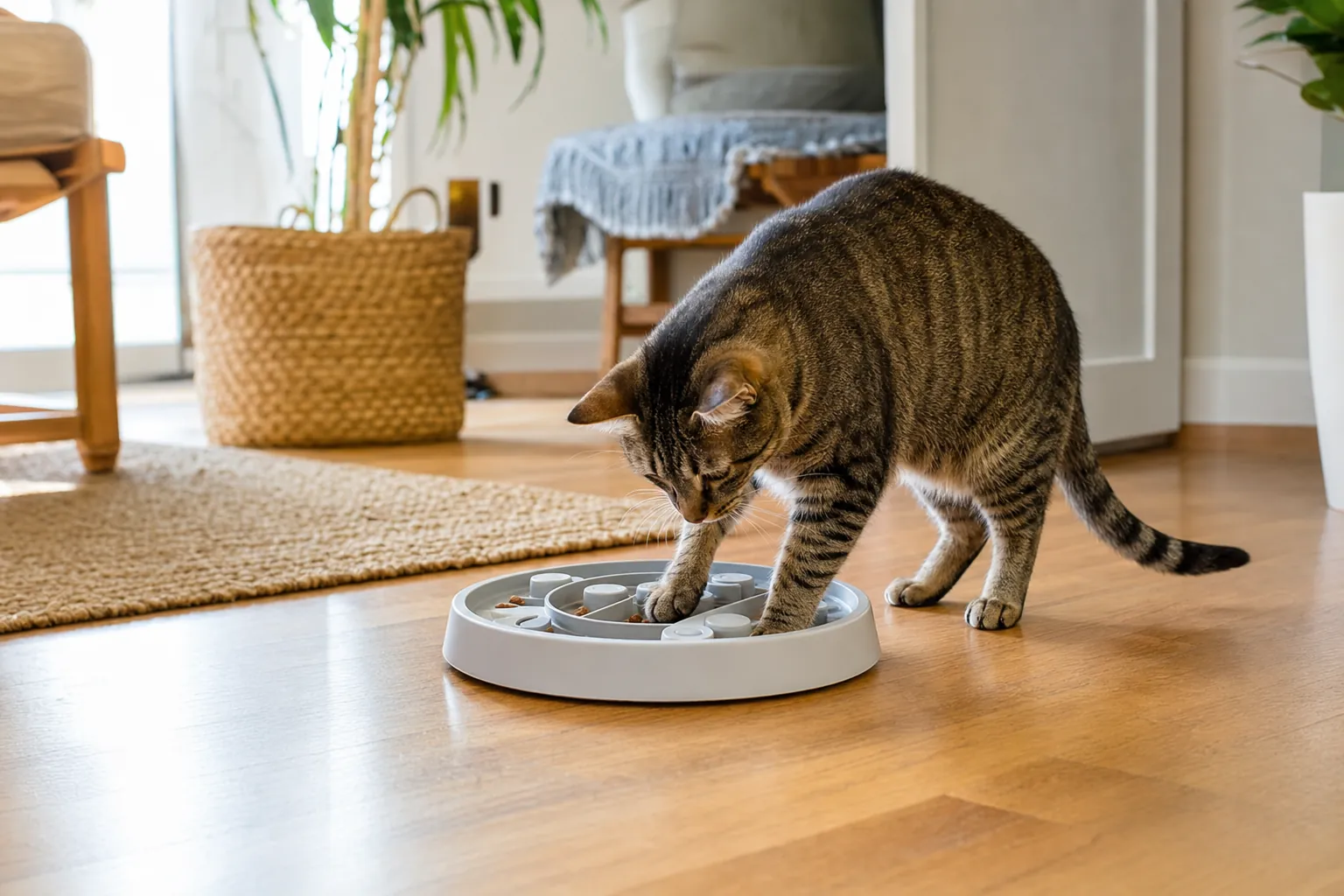
Cat play
Cat Puzzle Feeders: How to Start Without Frustration
A simple, safe way to help your cat learn food puzzles, from the first easy win to a routine they enjoy.
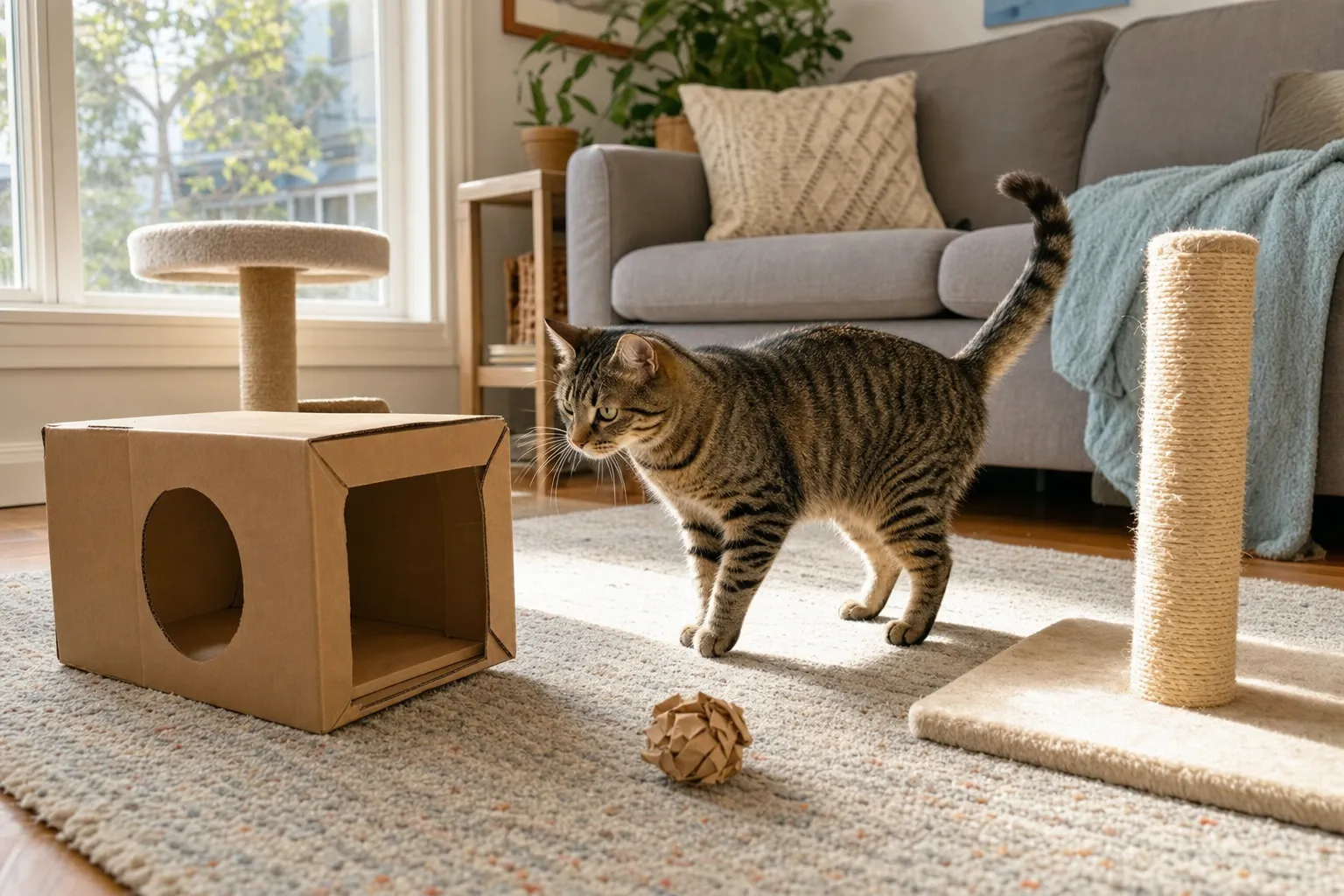
Cat play
Cat Enrichment Ideas for Happier Indoor Cats
Eight simple ways to make an indoor cat’s day more interesting, without turning your home into a toy store.
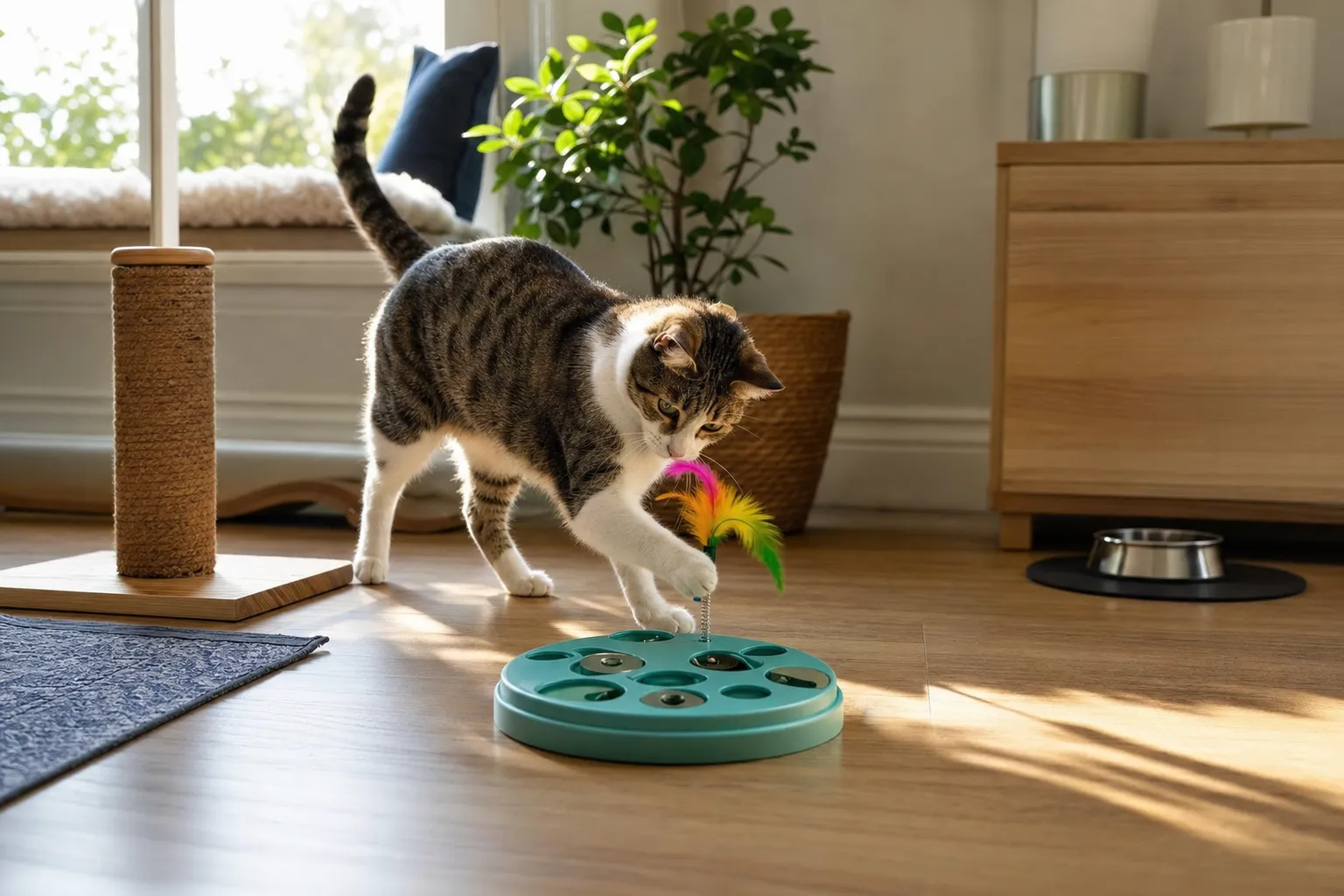
Cat play
How to Keep Cats Entertained While at Work
Build a simple, safe routine that gives an indoor cat more to explore while you are away.