A cat puzzle feeder turns a small part of mealtime into something to investigate. Instead of finding every bite in one bowl, a cat uses a paw, nose, or a little movement to uncover it. For some cats, that is a welcome bit of variety. For others, it looks confusing at first. The difference is usually not whether a cat is “smart enough.” It is whether the first experience feels easy, rewarding, and familiar.
The best start is deliberately simple. Keep your cat’s normal feeding routine steady, use part of the food you already measured, and choose a puzzle that lets the reward come out quickly. A food puzzle should add a small choice to the day, not turn breakfast into a stressful scavenger hunt. This guide walks through how to introduce one slowly, how to recognize when the challenge is right, and when it is better to make things easier.
What a cat puzzle feeder does
Puzzle feeders are food-holding toys or simple setups that ask a cat to work a little before eating. Some have open cups to reach into. Some roll and release kibble as they move. Others let you hide a few pieces of dry food around a room. The goal is not to make a cat labor for every bite. It is to give a curious cat a chance to search, paw, sniff, and solve a small problem during a normal meal.
The International Cat Care guide to puzzle feeders describes them as a way to add mental and physical activity during feeding while letting cats express natural hunting behavior. That is why puzzle feeders fit so naturally into an indoor-cat routine. A cat does not need to be racing around the house all day. A few interesting choices between naps can make the environment feel less repetitive.
Food puzzles work best alongside the basics, not instead of them. Fresh water, a clean litter box, quiet resting places, scratching choices, and regular play still matter. The American Association of Feline Practitioners’ home-environment guidance puts food activity alongside safe places, play opportunities, and a cat-friendly setup. Think of the feeder as one useful piece of the room, not the whole plan.
Start with an easy win
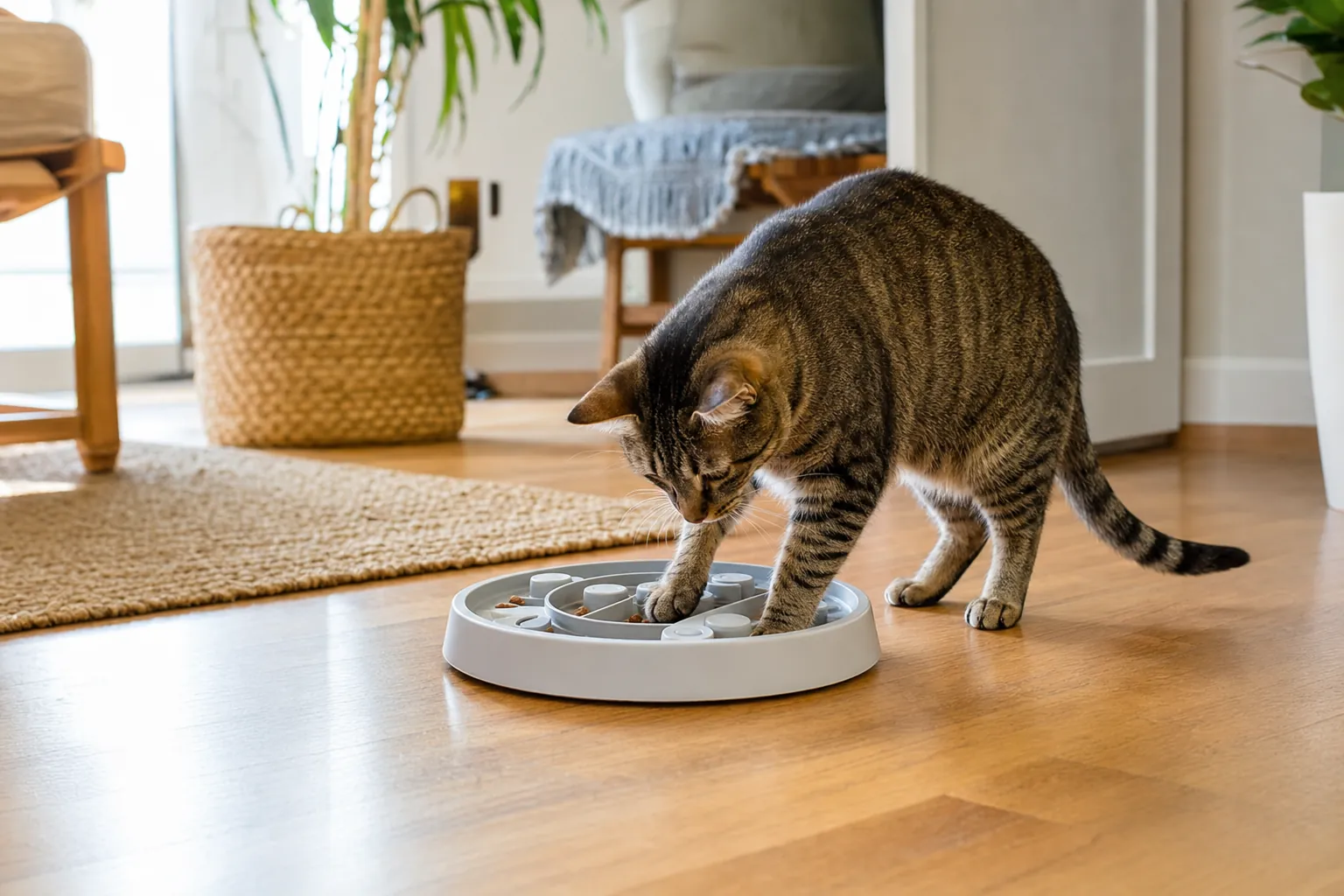
When a feeder is too difficult, a cat may walk away, meow at it, tip it over, or become more interested in the old bowl. That is useful feedback. The first session should be so easy that your cat succeeds quickly. A wide-open feeder, a shallow tray with a few pieces of kibble, or food placed in obvious spots around one quiet room is often enough to introduce the idea.
Keep the regular bowl available while your cat learns. The BC SPCA’s introduction tips recommend making the puzzle easy, helping the cat notice the food, and giving the cat a choice between the new feeder and the usual bowl. That choice matters. A new object can be interesting without being the only route to dinner.

Use only a small portion of the meal at first. If your cat eats dry food, set aside a spoonful of the usual measured kibble. Place it in the easiest setting, then watch from a comfortable distance. You can tap the feeder gently or let a piece fall out once so your cat notices the connection. After a few easy successes, many cats start to investigate on their own.
Choose the right kind of first feeder
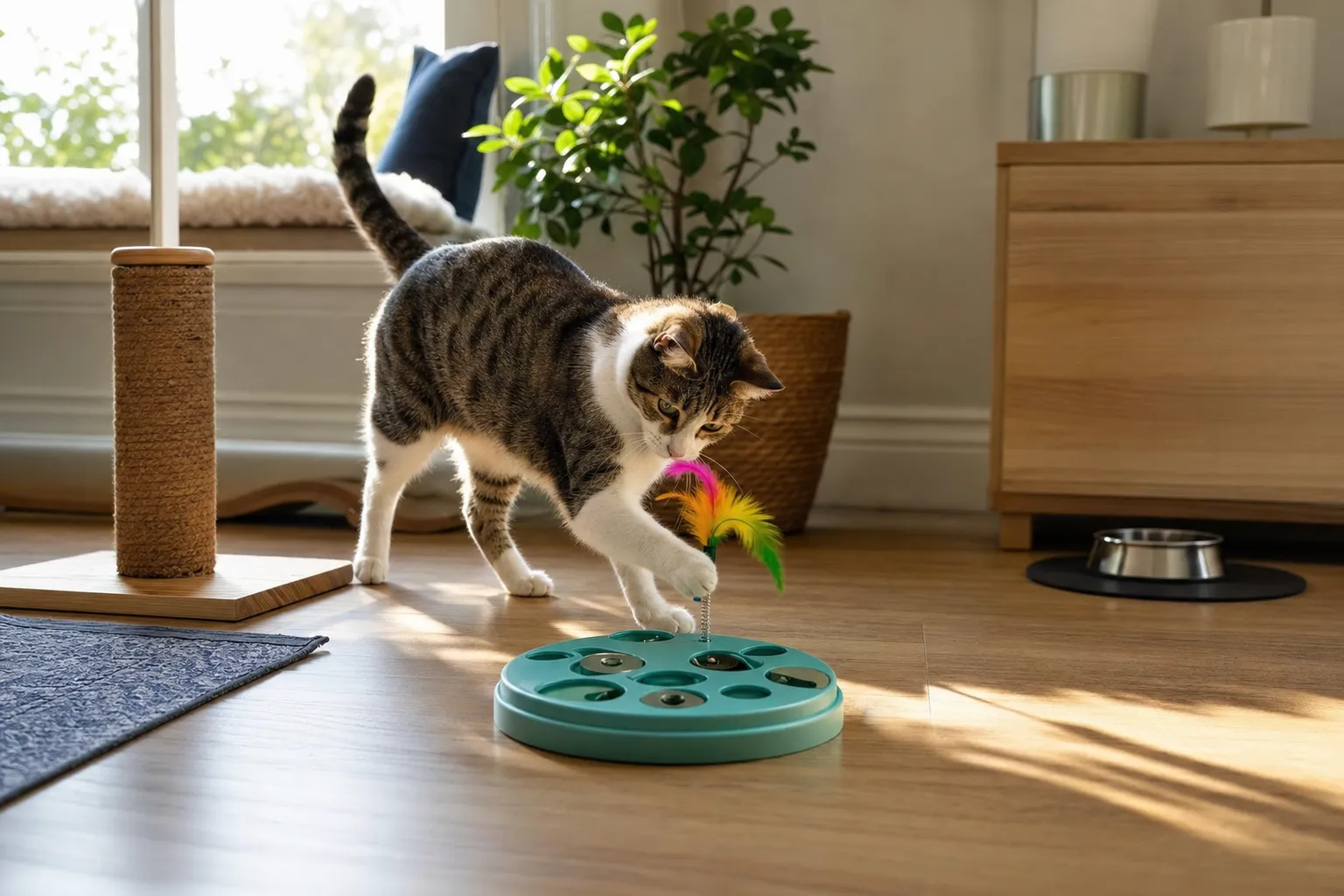
The best beginner feeder is not always the fanciest one. Match the setup to how your cat already moves. A cat who likes batting toys may understand a rolling feeder once the opening is wide enough. A cat who prefers to sit and use a paw may do better with open wells or a stationary board. A cautious cat may be most comfortable with a few pieces of food scattered in plain view before a new object enters the routine.
Keep the surface stable and easy to clean. Place a rolling feeder on a washable mat or in a room where furniture will not block it. Put a stationary feeder on a nonslip surface. Avoid a puzzle that needs a lot of force, has sharp edges, traps whiskers, or is difficult to take apart and wash. If your cat has arthritis, poor vision, dental concerns, or reduced mobility, keep the setup especially low, open, and easy to reach.
Do not rush to a homemade project with cut plastic, loose tape, or small pieces that could break off. A simple, intact household item can be fine when used safely, but the feeder must be easy to supervise and clean. If you are unsure whether an object is safe for your cat to paw, chew around, or tip over, skip it. A regular bowl is always better than a clever idea with a safety question attached.
Make the food portion honest
A puzzle feeder works best when it redistributes food that was already part of the day’s plan. Measure your cat’s normal meal first, then decide how much goes in the feeder and how much stays in the bowl. That keeps the activity from quietly becoming an extra handful of treats. It also makes it easier to tell whether your cat actually ate the portion or simply knocked it under the sofa.
For dry food, start with a small amount that your cat can finish during a short session. For wet food, use a shallow feeder made for that purpose and clean it promptly. A puzzle is not a reason to leave wet food sitting out for hours. Cats on a prescribed diet, cats who are underweight, or cats with a recent change in appetite should not have their feeding routine changed without veterinary advice. When eating itself is the concern, the puzzle can wait.
It is also fine for the feeder to be an occasional activity rather than a daily rule. Some cats enjoy one small food puzzle in the afternoon and prefer their main meal in the usual bowl. Others learn to use a feeder for a larger share of their dry food. The right approach is the one your cat can complete calmly and consistently.
Increase difficulty one small step at a time
Once your cat reaches into an easy feeder right away and finishes the food without frustration, you can make the next session slightly harder. Narrow the opening a little, put the feeder a few feet farther from the usual bowl, or use a design that needs one extra paw movement. Change one thing at a time. If you change the feeder, the room, the food, and the difficulty all at once, it becomes hard to tell what your cat dislikes.
Progress does not have to mean a complicated puzzle. A cat who likes a simple board may never care about a rolling ball, and that is fine. A cat who loves pushing food from a wide opening may be perfectly content without a maze of moving pieces. The point is engagement, not an advanced degree in feline problem solving.

The Food Puzzles for Cats resource library is a helpful reminder that puzzle styles can vary widely. That variety is useful because no two cats approach food the same way. Keep a simple option available even after your cat learns a harder one. A low-effort choice can be the better fit on a busy day, for an older cat, or when you are trying a new food routine.
Know the difference between concentration and frustration
A cat who is working comfortably may pause, sniff, use a paw, look at the feeder, and try again. You may see a few minutes of steady attention, then a break, then another attempt. That is normal. A frustrated cat may yowl more, repeatedly knock the feeder over, pace, give up immediately, or become fixated on the old bowl instead. Those are signs to lower the difficulty, not to insist that the cat keep trying.
Never use a food puzzle to make a cat “earn” a meal when they are already anxious, unwell, or not eating normally. A cat that suddenly refuses food, loses weight, seems painful while eating, vomits repeatedly, or shows a major behavior change needs veterinary attention. Puzzle feeding is enrichment, not a solution for a health concern.
Take a few quiet notes during the first week. Did your cat finish the kibble? Did the feeder stay in one place? Was the cat relaxed afterward? Did the cat return to the puzzle later? Those observations tell you far more than whether a particular style looks clever in a product photo. The best feeder is the one your cat chooses and can use safely.
Build a calm mealtime routine around it
Food puzzles tend to work better when they are part of a predictable rhythm. You might play for a few minutes before breakfast, put a small portion of food in an easy feeder, then leave a quiet resting place available. Or you might use a short puzzle session in the afternoon, then follow it with the regular evening meal. A routine gives your cat time to understand what happens next without making the activity feel like a surprise test.
After a session, wash the feeder as directed and pick up anything your cat did not finish. A clean setup matters, especially when food gathers in small openings. Then let the room be calm. Many cats will investigate, eat, groom, and settle down. Rest is part of a good enrichment routine, not evidence that the activity failed.

For more ideas beyond food activities, the cat enrichment guide covers scratching, hiding places, perches, and play choices that make an indoor space more interesting. If your cat spends part of the day alone, our guide to keeping cats entertained while at work can help you build a simple routine around the time you are away.
How Wowza Finds can help
A food puzzle is one way to make indoor time more interesting, but it works best with other kinds of play. Browse the cat collection for everyday toys and care finds, or explore automatic cat toys for indoor cats when your cat responds to rolling, fluttering, and changing movement. Keep those play styles separate from food time when that helps your cat stay focused and relaxed.
Build a more interesting cat routine
Explore everyday cat finds for movement, play, and quieter indoor moments.
Browse cat finds →Frequently asked questions
Are cat puzzle feeders good for every cat?
Many cats enjoy food puzzles, but the right starting point depends on age, mobility, appetite, and confidence. Begin with a very easy option and keep the regular food bowl available while your cat is learning. A cat who has trouble eating, is losing weight, has dental pain, or is on a prescribed diet should have a veterinarian guide any feeding change.
What food can I put in a cat puzzle feeder?
Dry kibble is usually the easiest place to begin because it moves cleanly through most puzzles. Use part of your cat’s usual measured meal instead of adding extra food. Some feeders can work with wet food, but they need to be shallow, easy to wash, and offered for a short supervised session.
How hard should a cat food puzzle be at first?
Make the first puzzle easy enough that your cat can get food almost immediately. Visible kibble in open cups, a few pieces scattered in an easy-to-see area, or a feeder with the widest opening helps your cat connect the object with a reward. Raise the difficulty only after your cat is relaxed and successful.
Can a puzzle feeder replace my cat’s normal bowl?
Some cats eventually do well receiving much or all of a measured dry-food meal through puzzles, while others prefer a mix of puzzle feeding and a bowl. The useful goal is a routine your cat can complete comfortably, not forcing every meal into a challenge.