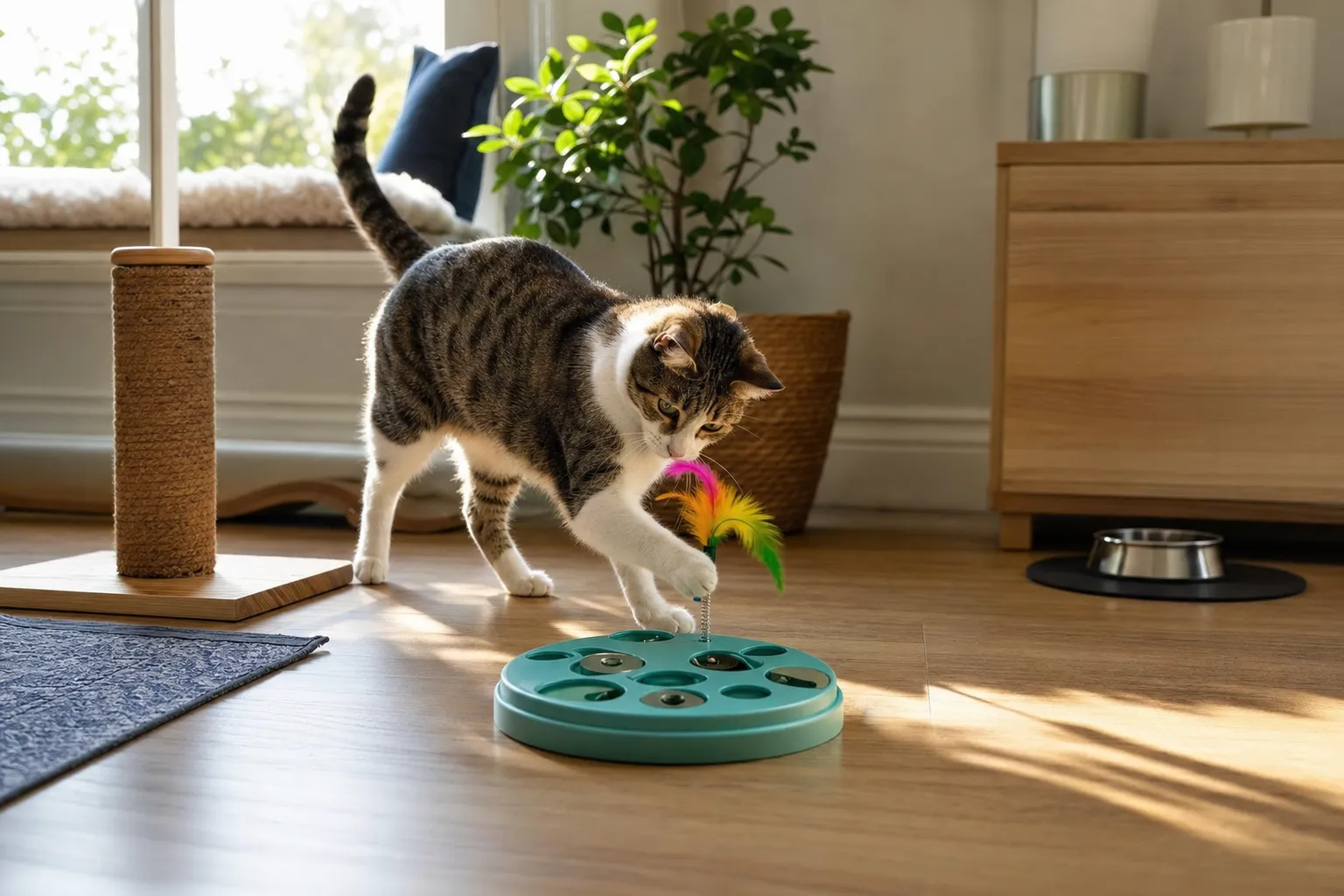
Leaving for work does not have to mean leaving your cat with nothing to do. Most indoor cats do not need a full-day entertainment schedule. They need a home that gives them safe chances to move, scratch, climb, watch, sniff, hide, and investigate. A few small changes can turn the quiet hours into a better part of the day.
The goal is not to keep a cat active every minute. Cats naturally spend a lot of time resting. The better goal is to offer choices around those naps, so a curious cat can act on a normal impulse instead of making a project out of the curtains, houseplants, or kitchen counter.
Start with the needs that make play feel good
Entertainment works best when the basics are already comfortable. Before adding a new toy, make sure your cat has clean water, a litter box in a quiet location, a comfortable resting spot, and a place to scratch. The American Association of Feline Practitioners describes a cat-friendly home around several core needs, including safe places, separate key resources, opportunities to play and hunt, and an environment that respects the cat's senses.
That is useful because it changes the question from "What toy should I buy?" to "What is missing from my cat's day?" A cat who cannot see out a window may need a perch. A cat who paces after breakfast may need a short hunt-style play session before you leave. A cat who raids cabinets may need more chances to forage for part of a meal.
1. Give your cat a job before you leave
A short interactive play session before work is often the highest-value part of the routine. Use a wand toy, a tossed soft toy, or another safe toy that lets your cat stalk, chase, pounce, and catch. Let the pace rise and fall rather than waving the toy constantly. A few successful catches keep the game from becoming frustrating.
Finish with a small portion of breakfast or a few treats. That sequence, play followed by food and then rest, fits the natural pattern many cats enjoy. It also gives a high-energy cat a better chance of settling down after you head out.

2. Make food part of the day's exploration
Instead of putting every bite in one bowl, reserve a small, measured part of your cat's normal food for a puzzle feeder or a few simple hiding spots. Start easy. The first challenge should be simple enough that your cat succeeds quickly. If the puzzle is too hard, some cats walk away, while others become frustrated.
Dry food works well for many commercial puzzle toys. For wet food, a shallow lick mat or a safe frozen portion can slow the pace, but keep cleanup and your cat's usual feeding plan in mind. The Ohio State Indoor Pet Initiative recommends food puzzles as one way to add activity and choice to an indoor cat's environment.
Keep portions honest. Food puzzles should redistribute part of the usual meal, not quietly add extra calories. If your cat is on a prescribed diet or has a health condition, ask your veterinarian before changing the routine.
3. Rotate toys instead of leaving everything out
A pile of toys can become wallpaper. Keep a small selection out, then swap it every few days. One might flutter, another might roll, and another might make a light sound. Variety matters more than quantity because different movement invites different kinds of play.
Check every toy before you leave. Anything with loose string, worn feathers, small pieces, damaged plastic, or a part your cat can swallow should be removed. Independent play is only useful when the setup is safe enough to be left in the room.
4. Build a better view
For many indoor cats, a window is live entertainment. A stable window perch or cat tree near a safe view gives them movement, light, and changing outdoor activity to watch. Make the area comfortable enough for a long nap too. A soft bed, a scratcher nearby, and a secure perch can turn one square of the room into a favorite destination.
Safety comes first. Keep windows and screens secure, move breakable objects away from launch zones, and check your houseplants. Some common houseplants can be harmful to cats, so use the ASPCA toxic and non-toxic plant list before giving a cat access to a plant-filled window.
5. Add height, hiding spots, and scratch zones
Horizontal floor space is only one part of a cat's territory. A cat tree, shelf, or stable perch gives a cat a place to observe the room without being in the middle of it. A cardboard box, tunnel, or covered bed gives the opposite option: a place to disappear for a while.
Pair those choices with scratching surfaces. Put a vertical scratcher where your cat already stretches or scratches, and use a horizontal scratcher if that is what your cat prefers. Scratching helps cats stretch, leave visual and scent signals, and keep their claws in shape. Giving that behavior a good place to land protects both the cat's routine and your furniture.
6. Match the activity to your cat
Not every cat wants the same kind of entertainment. Watch what your cat already chooses when they have free time. A cat who watches birds from the window may value a secure perch more than a noisy rolling toy. A cat who carries toys around may enjoy a light plush toy that can be tossed and caught. A cat who opens cabinets may be telling you that food puzzles and small scavenger hunts are worth trying.
Age and confidence matter too. Kittens often need frequent, short bursts of play and a carefully kitten-proofed room. Adult cats may be happy with a predictable mix of a morning hunt, a puzzle, and a favorite resting spot. Senior cats can still enjoy enrichment, but easier access, quieter toys, and comfortable routes up to a perch may be more inviting than a high-energy chase.
When introducing something new, leave a familiar option nearby. Put a new tunnel beside the old bed. Place a scratcher near the couch corner your cat already visits. Add treats to the first food puzzle. This gives a cautious cat a low-pressure way to investigate instead of forcing a sudden change to the whole room.
7. Use automatic toys carefully
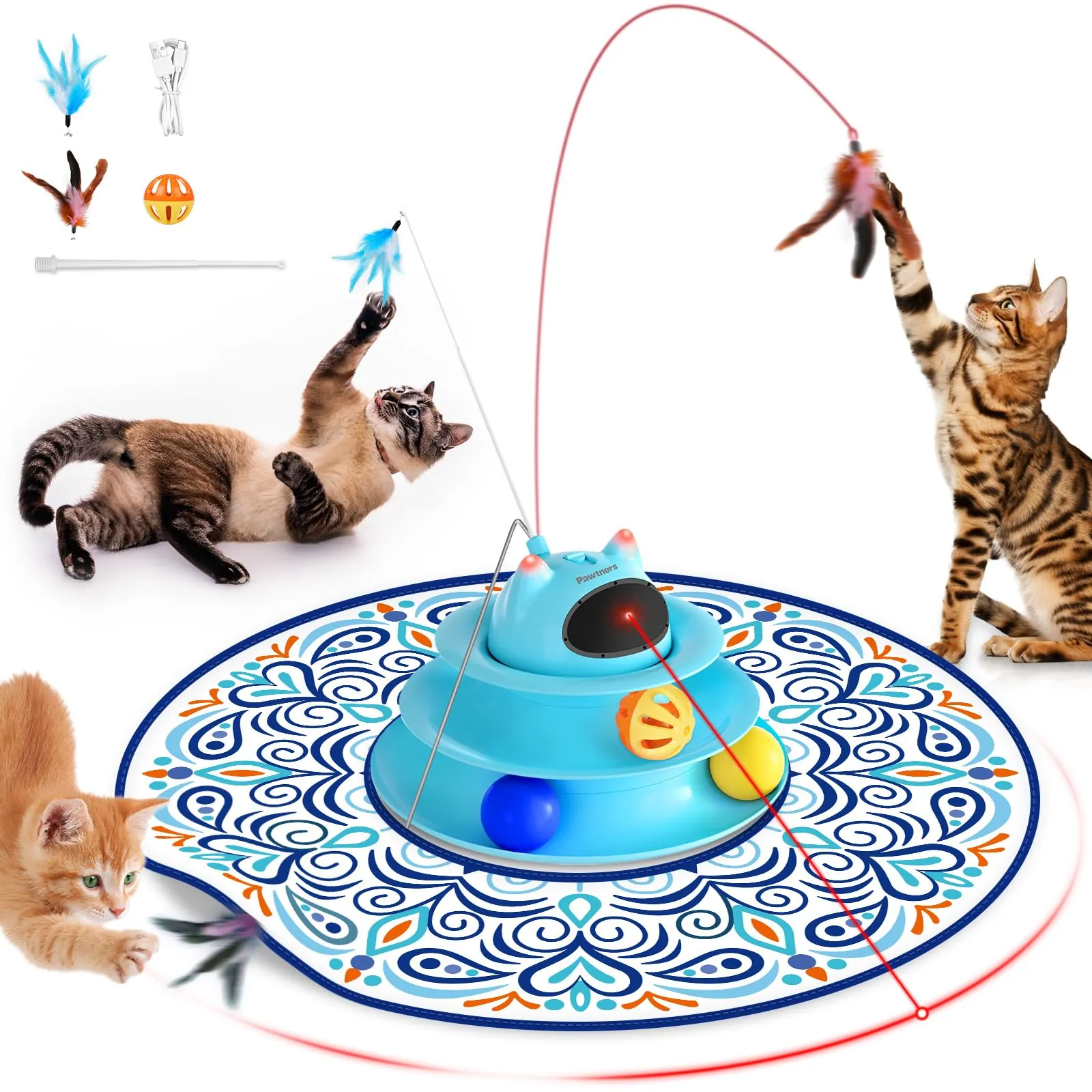
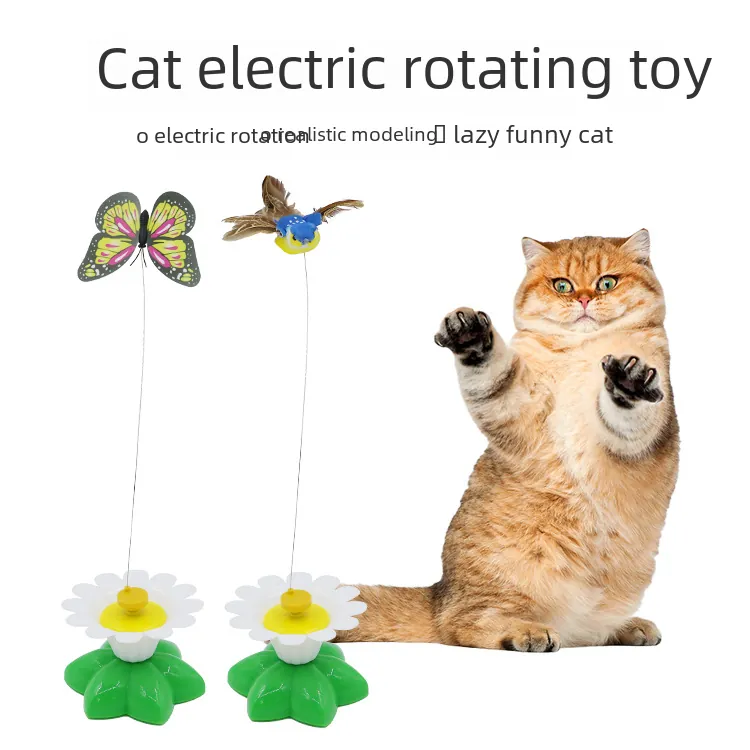
Automatic toys can add variety on a workday, especially for cats who respond to movement. Choose a model with a stable base, inspect it often, and follow the maker's guidance about supervision. It is smart to use automatic play as one part of the environment, not the entire plan.
A motion toy works better when the room also has a perch, scratcher, hiding spot, and a quiet place to rest. That gives your cat the option to engage or ignore it. Some cats will chase for five minutes, then sleep in the sun for three hours. That is a successful day, not a failed toy.
8. Keep the routine simple and predictable
A useful workday plan can be as simple as this: play for a few minutes, serve breakfast with part of the meal in a puzzle, leave one or two checked toys out, and make sure the favorite perch and scratcher are available. When you get home, spend a little time on another short play session and rotate the toys for tomorrow.
Do not change every part of the house at once. Add one thing, watch what your cat chooses, and build from there. The Animal Humane Society's indoor cat enrichment ideas make the same practical point: cats can get stimulation from hunting games, vertical space, safe views, and scent or food-based activities, not just from more toys.
A five-minute leaving-for-work checklist
Before you walk out the door, do a quick scan. Fresh water should be available in a spot that is easy to reach. The litter box should be clean enough for your cat to use comfortably. Windows, screens, cords, strings, and small objects should be checked for safety. If you leave an automatic toy or food puzzle out, make sure it is clean, intact, and appropriate for independent use.
Then look for choices, not clutter. One place to climb, one place to hide, one place to scratch, one safe view, and one small activity are a much better starting point than filling the room with random toys. A quieter cat may skip the activity and sleep on the perch. A playful cat may circle back to the puzzle in the afternoon. Both are normal responses.
Finally, keep a note of what worked. Did your cat use the window perch? Was the food puzzle empty? Did they ignore the new rolling toy but go straight for the cardboard box? Those small observations are more useful than a generic product list. They show you where to invest time and where to keep the routine simple.
Try the same setup for several workdays before deciding it failed. Cats often need time to notice a new perch or learn how a food puzzle works. If an item gets no interest, change only one detail: move it closer to a favorite spot, make the puzzle easier, or swap it for a different type of movement. Keep the rest of the room familiar so you can tell what changed. The best routine should be repeatable on a busy morning, not something that only works on a weekend. Small experiments help you find a routine your cat actually chooses.
When boredom may be something else
Extra energy is normal. A sudden change in behavior is different. If your cat starts yowling more than usual, stops using the litter box, overeats, hides, overgrooms, becomes aggressive, or loses interest in usual play, do not assume boredom is the full story. A veterinary check can rule out health problems and help you choose the right next step.
Cats also differ. A confident young cat may enjoy a busy rotation of movement toys and food puzzles. A shy or older cat may prefer a quiet perch, a familiar scratcher, and a gentle play session with you nearby. The best setup follows your cat's behavior, not a one-size-fits-all checklist.
Build the right kind of cat play corner
Explore cat finds for independent movement, everyday play, and a more interesting indoor routine.
Browse cat finds →Frequently asked questions
How long can a cat be left alone while I am at work?
Many healthy adult cats do fine during a normal workday when they have fresh water, a clean litter box, a safe home, and a predictable routine. Kittens, senior cats, cats with medical needs, and cats who show distress need more individual support from a veterinarian or trusted caregiver.
Do cats need new toys all the time?
No. Rotating a small group of toys is usually more useful than leaving every toy out at once. Put a few toys away, then swap them back in after a few days so familiar objects feel fresh again.
Are automatic cat toys safe to leave out?
Choose a sturdy toy designed for independent use, check it for loose parts, and follow its supervision guidance. Avoid leaving string, feathers, small detachable pieces, or damaged toys available when you are away.
What if my cat still seems bored?
Start by checking the basics: health, litter box comfort, play time, food routine, hiding places, and vertical space. A sudden behavior change, overgrooming, frequent vocalizing, or litter box changes are good reasons to call your veterinarian.